Challenges
Three places a surgical day loses time
Before the first case starts. While a case runs. In the gap between cases. Each point has an owner, a time it was expected by, and a cost per minute. The order below is the order of the day.
First Case On-Time Start
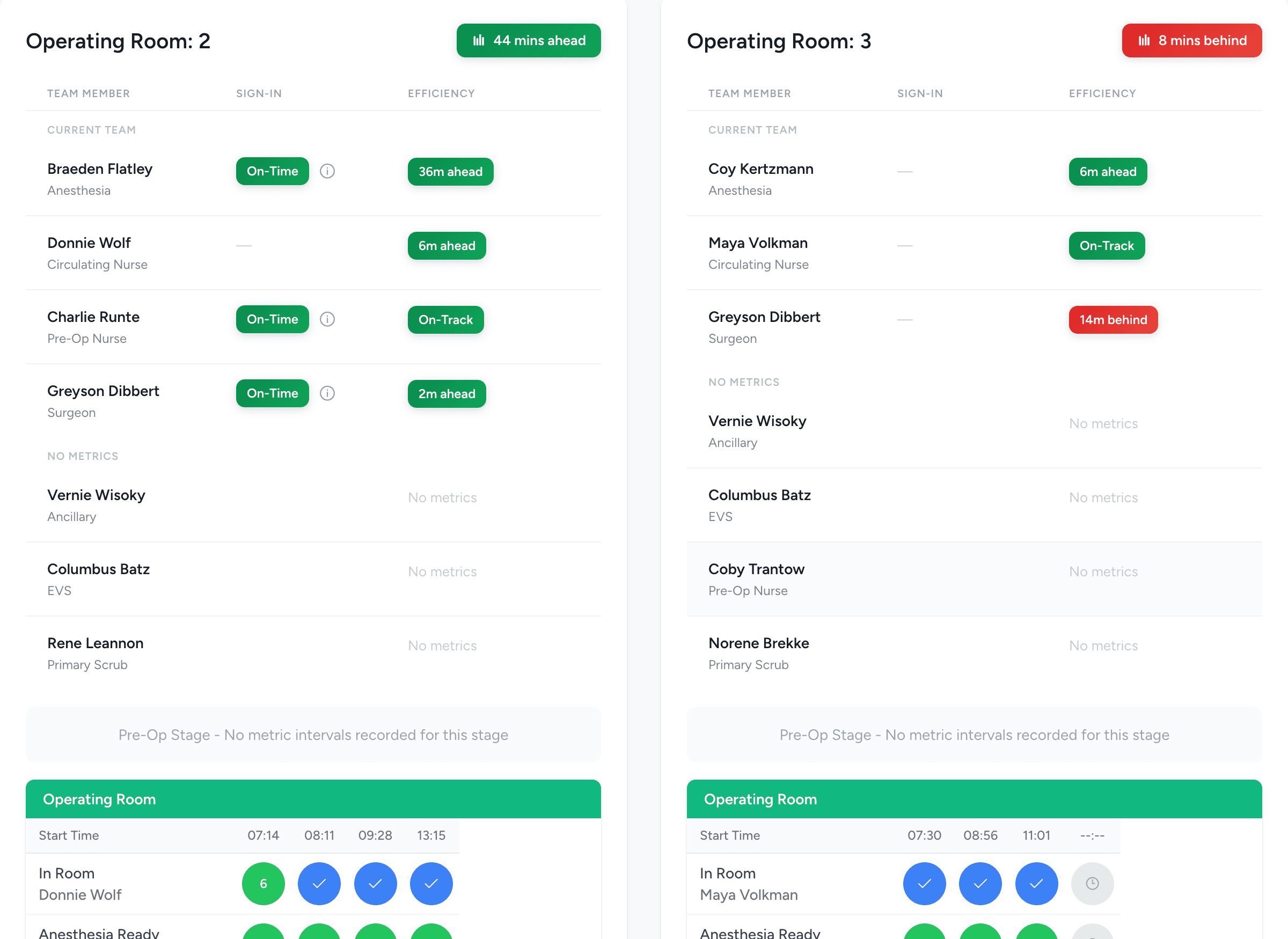
When the first case starts late, every case behind it inherits the delay. Pre-op readiness, anesthesia and surgeon sign-in each have an owner and a time they were expected by.When the first case starts late, every case behind it inherits the delay and the room never makes the time back. Pre-op readiness, anesthesia and surgeon sign-in each have an owner and a time they were expected by. Measuring each against that expectation, while the patient is still in pre-op, turns a late start into a known cause.
Operating Room Efficiency
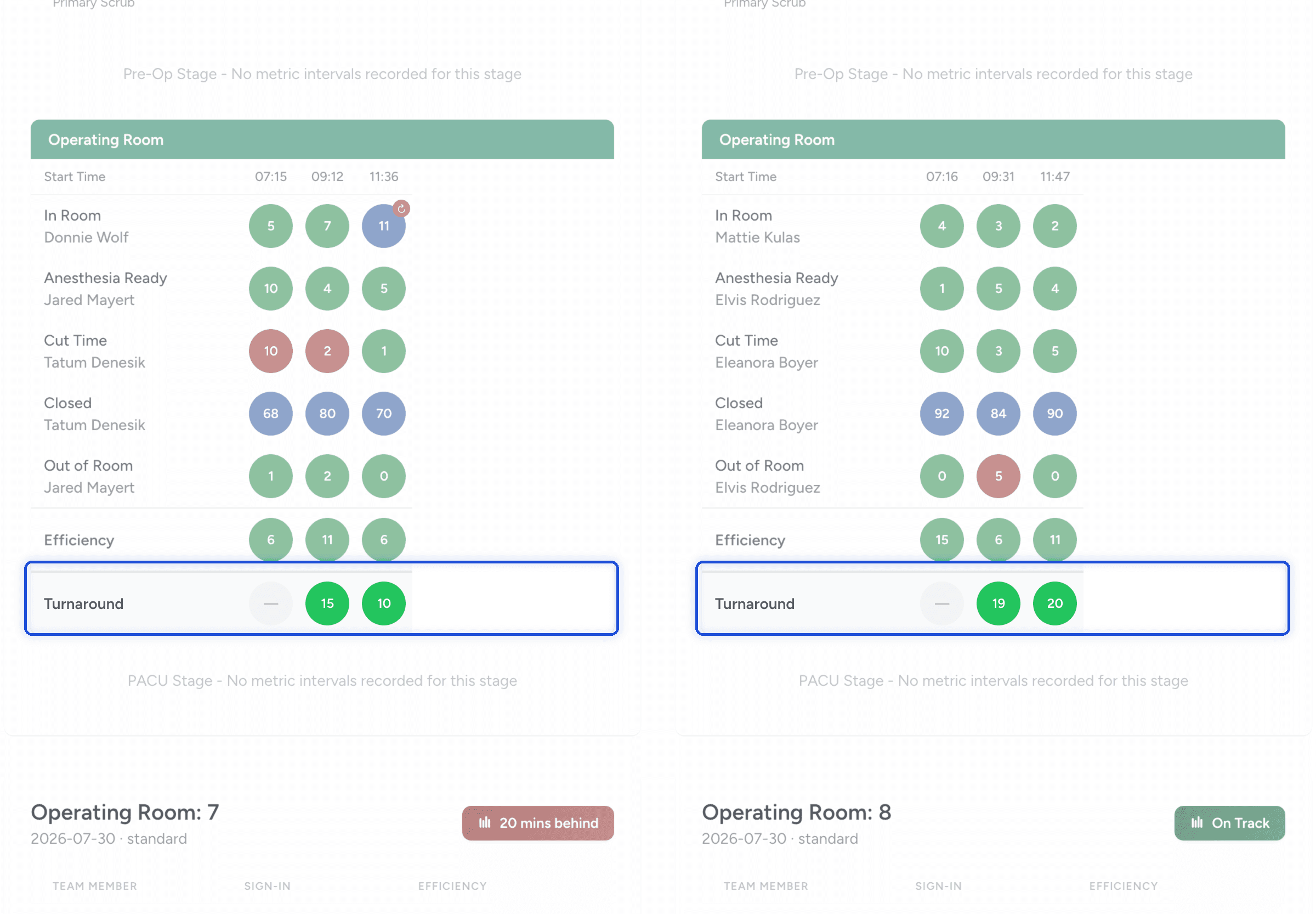
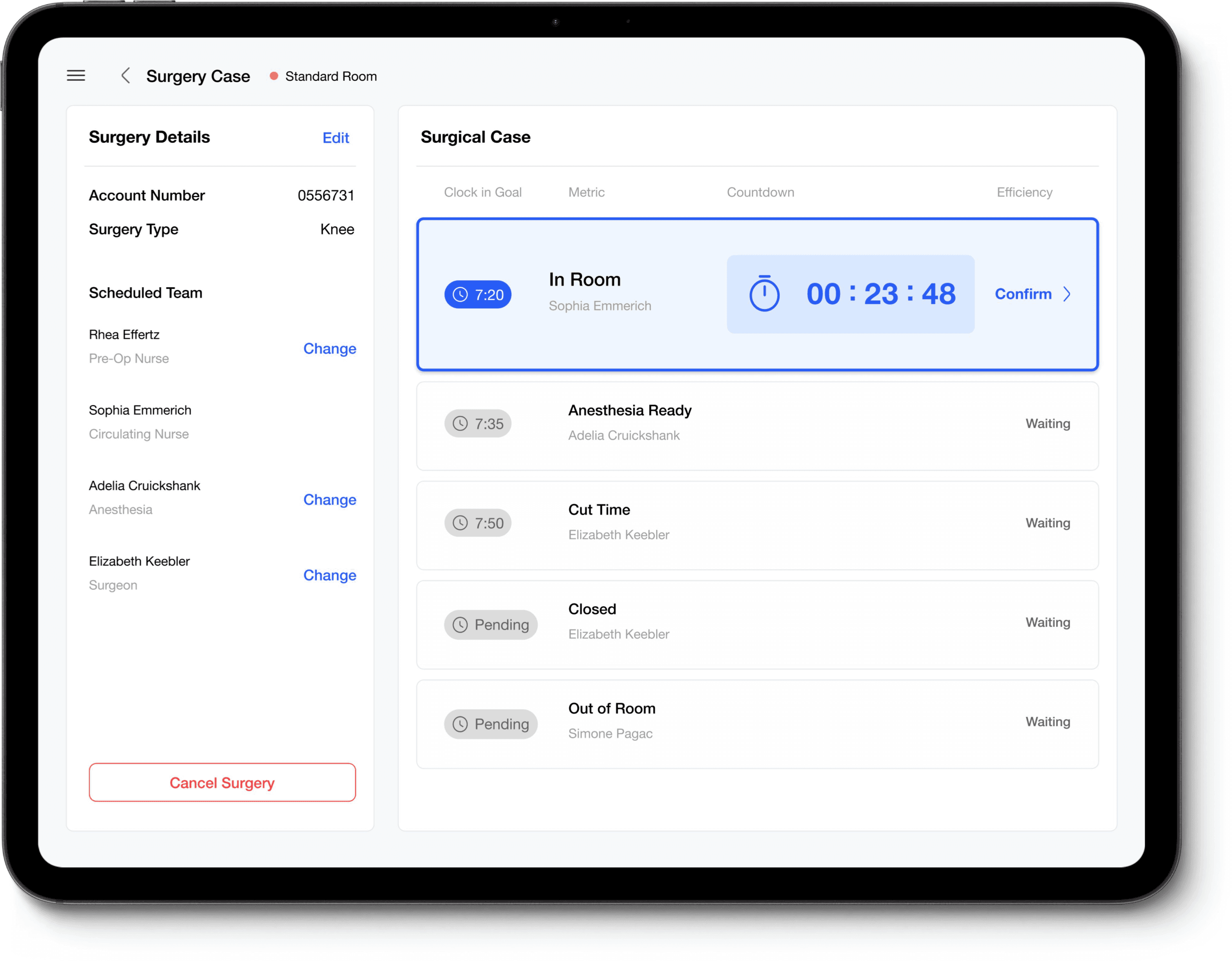
Five intervals per case, each with an expected duration, and nobody watching them while they happen. At roughly $47 a minute, this is the largest cost no report adds up.Five intervals per case, each with an expected duration. Across a day of cases that is more than 200 numbers nobody is watching while they happen. At roughly $47 a minute, the minutes lost inside the case are the largest cost in the department that no report adds up.
Turnaround Time
Every hospital records turnaround; almost none manage it. The EMR writes timestamps down after the fact and never shows them while the room is still empty.Every hospital records turnaround; almost none manage it. The EMR writes the timestamps down after the fact. It never measures them against what they should have been, and never shows them while the room is still empty and the next patient is waiting.